

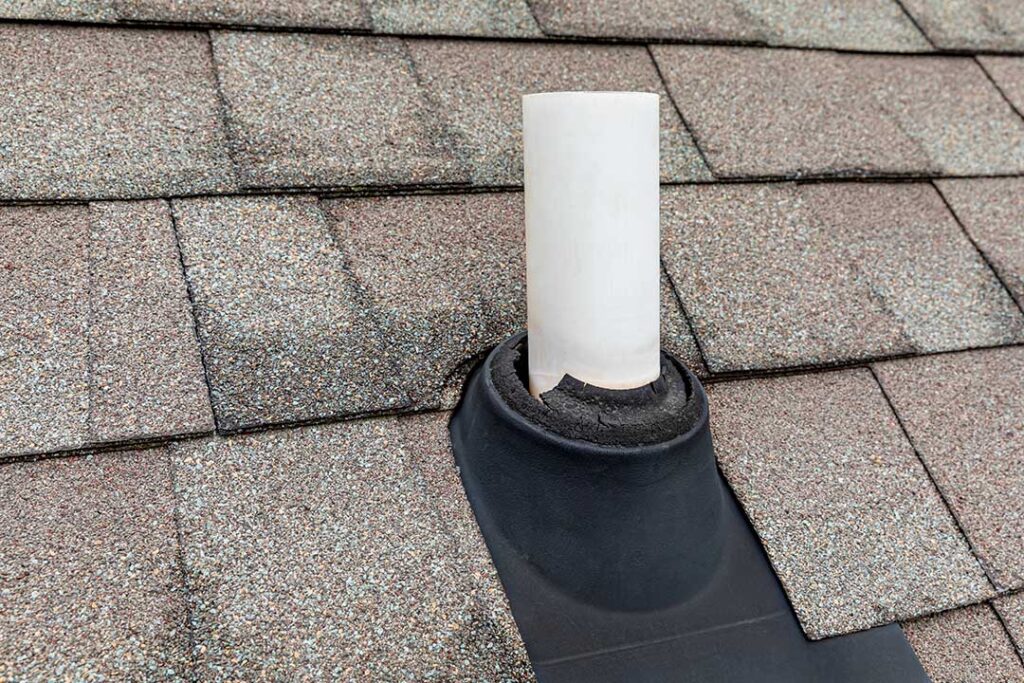
Roof leaks rarely come from one obvious hole. Water may enter through damaged shingles, aging flashing, roof openings, clogged drainage paths, or moisture problems in the attic. The visible stain on a ceiling is often several feet away from the actual entry point.
Understanding the likely causes helps residents describe the problem accurately, recognize urgent conditions, and avoid mistaking condensation or plumbing leaks for roof damage.
What usually causes a roof to leak?
The most common causes are damaged roofing materials, failed flashing, clogged gutters, roof penetrations, poor drainage, storm damage, and attic moisture. Older roofs may develop several of these problems at the same time.
Rain does not always fall straight onto a leak. Wind can push water beneath shingles, into wall joints, or around vents and chimneys. Water can also travel along roof decking, rafters, insulation, and drywall before appearing indoors.
How do damaged or aging shingles lead to leaks?
Shingles protect the roof from direct exposure to rain, sunlight, wind, and temperature changes. Over time, they may crack, curl, blister, loosen, or lose protective granules.
Common shingle-related problems include:
- Cracked or missing shingles after strong wind
- Curling edges caused by age, heat, or installation problems
- Exposed fasteners
- Areas where granules have worn away
- Shingles lifted by wind and not properly resealed
- Damaged seal strips between shingle courses
Storms can make these defects appear suddenly, but the underlying weakness may have developed gradually. In Olathe, roofs also face repeated seasonal changes, including hot summer sun, heavy rain, freezing temperatures, and occasional hail. That combination can accelerate wear on older roofing materials.
A few missing granules do not automatically mean a roof is leaking. However, widespread granule loss, bare patches, or damaged shingles near roof edges and penetrations deserve attention.
Why is flashing a frequent source of leaks?
Flashing is the sheet material or membrane installed where the roof meets another surface. It is commonly found around chimneys, walls, valleys, skylights, vents, and roof edges.
Flashing can leak when it is:
- Bent or corroded
- Cracked or separated
- Installed with gaps
- Covered with failing sealant
- Damaged during other roof work
- Improperly integrated with shingles or siding
Roof-to-wall transitions are especially vulnerable because water naturally collects or changes direction in these areas. A small gap may allow water into the wall cavity or attic even when the shingles nearby appear to be in good condition.
Repeatedly applying caulk over failed flashing may hide the symptom temporarily without correcting the water path. The underlying connection must be evaluated as part of the repair.
Can gutters and downspouts cause roof leaks?
Yes. Gutters usually do not create a hole in the middle of a roof, but blocked or poorly draining gutters can contribute to leaks near the eaves, fascia, and roof edges.
Leaves, twigs, roof granules, and other debris can restrict water flow. During heavy rain, water may overflow against trim or back up beneath the first course of shingles. Gutters that pull away from the home can also allow water to soak the fascia and adjacent wood.
Downspouts that discharge too close to the foundation may create other moisture problems, but they are not usually the direct cause of a roof leak. The more immediate roof concerns are overflowing gutters, improper slope, loose sections, and ice or debris blocking the drainage path.
Which roof openings are most likely to leak?
Every opening through a roof requires careful sealing and flashing. Common leak locations include:
- Plumbing vent pipes
- Bathroom and kitchen exhaust vents
- Attic ventilation fixtures
- Chimneys
- Skylights
- Satellite or other equipment mounts
- Roof-mounted heating or cooling components
Rubber seals around vent pipes can become brittle with age. Metal flashing may loosen, and older skylights may develop problems around their frame or flashing system.
A bathroom fan can also contribute to attic moisture if it exhausts into the attic instead of outdoors. That moisture may condense on cold roof surfaces, dampen insulation, and eventually resemble a roof leak.
How can valleys and poor drainage cause water intrusion?
A roof valley is where two sloped sections meet. Valleys collect water from larger areas of the roof, so installation defects or debris can have significant effects.
Leaks may develop when valley materials are damaged, shingles are cut incorrectly, debris traps moisture, or water is forced beneath the surrounding shingles. Roofs with multiple slopes, dormers, and additions have more transitions and drainage paths, which can increase the number of areas requiring careful inspection.
Flat or low-slope sections can also be vulnerable if water remains on the surface instead of draining promptly. Ponding water may result from inadequate slope, settlement, blocked drains, or uneven roof decking.
Can hail and wind damage cause a leak later?
Yes. Storm damage does not always produce an immediate indoor leak. Hail may bruise or fracture shingles, while wind can loosen edges, disturb flashing, or lift shingles without removing them completely.

A roof may remain dry during a light rain but leak during a wind-driven storm later. Damage may also become more noticeable after several freeze-thaw cycles expand small cracks.
After severe weather, useful exterior observations include:
- Missing or displaced shingles
- Fresh piles of granules near downspouts
- Dented metal flashing or vents
- Torn roofing membranes
- Fallen branches or damaged roof accessories
- Water stains that appeared after the storm
Roof inspections become hazardous when surfaces are wet, steep, icy, or affected by electrical or structural damage. In those conditions, staying on the ground and documenting visible damage is safer than climbing onto the roof.
Can attic condensation be mistaken for a roof leak?
Yes. Not every ceiling stain is caused by rain entering through the roof.
Condensation can form when warm, moist indoor air reaches cold roof decking or fasteners. This is more likely when attic air sealing is poor, insulation is uneven, soffit vents are blocked, or exhaust fans discharge into the attic.
Signs that may point toward condensation include:
- Moisture spread across many roof-deck surfaces
- Frost or dampness on several fasteners
- Mold-like staining in multiple attic areas
- Wet insulation without a clear exterior entry point
- Problems that appear during cold weather rather than after rain
Plumbing leaks, heating and cooling equipment, and bathroom exhaust ducts can also create ceiling stains that are incorrectly blamed on the roof. Tracing the moisture path from the attic side is often more reliable than judging the stain from inside the room.
What should residents check after noticing a leak?
Start by noting when the water appears. A leak that occurs only during wind-driven rain suggests a different problem from moisture that appears during cold weather or after using a bathroom.
From a safe location, look for:
- Ceiling discoloration or bubbling paint
- Damp insulation
- Wet rafters or roof decking
- Drips near vents, chimneys, or exterior walls
- Missing shingles or visible storm debris
- Overflowing gutters
Place a container beneath active dripping and move furniture away from the area. Avoid electrical fixtures that are wet or surrounded by damp drywall. A sagging ceiling can indicate significant water accumulation and should not be pressed or punctured.
The most useful repair information includes the room affected, the weather conditions, when the stain first appeared, whether the attic is damp, and whether recent storms occurred. Identifying the source may require examining both the roof surface and the attic because water often travels before it becomes visible.