

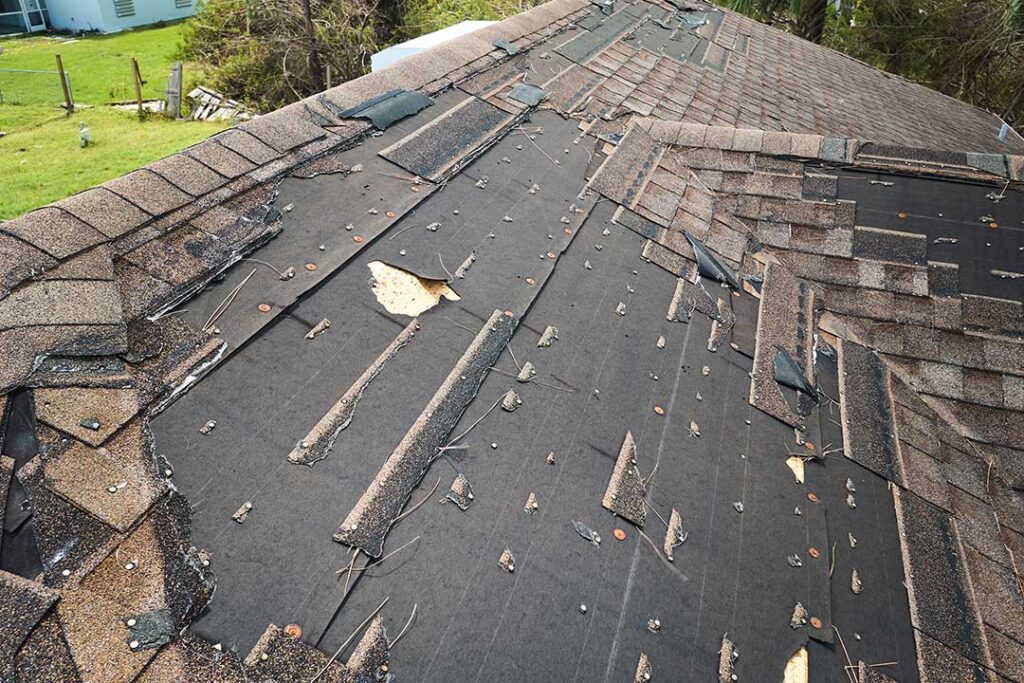
Roof damage rarely begins with a dramatic collapse. More often, it starts with a loose shingle, a small ceiling stain, or water entering around a roof penetration. In Olathe, KS, seasonal temperature changes, strong thunderstorms, hail, wind, ice, and repeated freeze-thaw cycles can gradually weaken roofing materials.
Finding problems early can help prevent interior water damage, insulation problems, mold growth, and more extensive structural repairs. A basic roof check does not require climbing onto the roof. Many warning signs can be found from the ground, attic, or upper floors.
What are the earliest visible signs of roof damage?
The first signs are often changes in the roof’s surface or drainage system. Look for anything that appears loose, missing, uneven, stained, or newly out of place.
From the ground, use binoculars if needed and inspect:
- Missing, cracked, curled, or lifted shingles
- Shingles with exposed dark underlayment
- Areas that appear noticeably flatter or wavy
- Shingle granules collecting in gutters or downspouts
- Rusted, damaged, or displaced metal flashing
- Sagging along the roofline
- Dark streaks, moss, or algae-like growth
- Debris or broken branches resting on the roof
A single small defect does not always indicate a widespread failure, but it should not be ignored. Roof damage can expand after additional rain, wind, or freezing weather.
How can gutters and downspouts reveal roof problems?
Gutters often provide evidence of roof wear before the roof itself is closely examined. Excessive granules in the gutter resemble coarse sand or tiny dark-colored pebbles. A small amount may appear as shingles age, but a sudden increase can suggest accelerated surface loss.
Also check whether gutters:
- Pull away from the fascia
- Hold standing water
- Overflow during ordinary rainfall
- Contain shingle pieces or roofing debris
- Have separated seams
- Discharge water near the foundation
Overflow does not always mean the roof is damaged. Leaves, ice, or clogged downspouts can block drainage. However, repeated overflow may allow water to reach fascia boards, soffits, siding, windows, or the foundation. In neighborhoods with mature trees, seasonal debris can make gutter monitoring especially useful.
What should homeowners look for inside the attic?
The attic can reveal roof leaks that are not yet visible on ceilings or walls. Inspect during daylight hours with a flashlight, but avoid stepping between structural supports. If the attic has loose-fill insulation, walk only on installed flooring or boards designed for foot traffic.
Look for:
- Damp insulation
- Dark water marks on rafters or roof decking
- Rust around nails or metal fasteners
- A musty odor
- Daylight visible through the roof deck
- Condensation or frost on the underside of the roof
- Warped or softened wood
- Fresh stains below roof valleys, vents, or flashing
Not every attic moisture problem comes from a roof leak. Poor ventilation, air leakage from the living space, bathroom exhaust venting into the attic, and high indoor humidity can also create condensation. The location and timing of the moisture can help distinguish between a roof leak and a ventilation issue.
What do ceiling and wall stains mean?
Brown, yellow, or gray stains on ceilings and upper walls commonly indicate that water has entered the building envelope. A stain may remain visible long after the roof has dried, so the absence of active dripping does not prove the problem is resolved.
Pay close attention to stains near:
- Exterior walls
- Chimneys or roof-to-wall intersections
- Skylights
- Attic access panels
- Bathroom ceilings
- Areas beneath roof valleys
- Recessed lights or ceiling fixtures

A stain that grows after rain is a strong warning sign. Bubbling paint, peeling wallpaper, swollen drywall, or soft ceiling material suggests that moisture may still be present. Water near electrical fixtures creates an added safety concern; avoid touching wet fixtures or nearby wiring.
Can wind and hail damage be spotted from the ground?
Some storm damage is easy to see, while other damage is subtle. After a severe thunderstorm, inspect the property for displaced shingles, exposed fasteners, bent flashing, and branches that have struck the roof.
Hail may leave:
- Small dents in metal vents, gutters, or flashing
- Bruised or fractured shingles
- Random dark spots where the protective surface has been broken
- Damaged window screens, siding, or outdoor equipment
Wind damage often appears as lifted shingle edges, missing tabs, or sections that look uneven. A roof may still appear intact from the street even if wind has loosened materials underneath. After a major storm, a ground-level inspection is safer than climbing onto a wet or steep roof.
Which roof areas deserve the closest attention?
Leaks frequently begin at transitions and penetrations rather than in the middle of a shingle field. These areas include valleys, roof edges, flashing, vents, chimneys, skylights, and places where additions or lower roof sections meet the main roof.
Roof valleys carry concentrated water during rain and can collect leaves or ice. Flashing around vents and wall intersections can loosen over time. Sealants may crack, shrink, or separate as temperatures change.
Flat or low-slope sections also deserve attention because they drain more slowly and may hold water longer. Roof sections beneath overhanging trees can experience extra wear from branches, moisture, and repeated debris accumulation.
How often should a roof be checked?
A practical schedule is to inspect the roof from the ground twice a year and after significant storms. Early spring and fall are useful times because winter weather, summer thunderstorms, falling leaves, and temperature swings can expose developing problems.
An inspection is also worthwhile after:
- Hail or high winds
- A fallen branch
- Heavy snow or ice accumulation
- Repeated gutter overflow
- A new ceiling stain
- Attic condensation or musty odors
- Exterior remodeling that affects flashing or drainage
Keep dated photographs of unusual conditions. Comparing images over time can show whether a shingle is becoming more curled, a stain is spreading, or a gutter is pulling farther away from the roof edge.
When is roof damage an urgent safety issue?
Some conditions require prompt attention because delay could increase the risk of water intrusion or injury. These include active leaks, a visibly sagging roofline, large areas of missing roofing, exposed electrical components, or major storm debris.
Do not climb onto the roof during rain, ice, strong wind, or immediately after a storm. Wet shingles are slippery, and damaged roofing may not support a person safely. A roof viewed from the ground, attic, and upper-level windows can provide useful information without creating unnecessary risk.
The most reliable early-warning system is a combination of observations: exterior changes, gutter debris, attic moisture, interior stains, and storm-related damage. Recording these signs promptly helps distinguish a minor maintenance issue from a problem that may be allowing water into the home.